
3 Private Photo Sharing Workflows to Speed Delivery for Photographers
A practical workflow guide for pro photographers: publish from Lightroom, use live embeds, enforce access controls, compare pricing, and follow three real...

3 Private Photo Sharing Workflows to Speed Delivery for Photographers
The best private photo sharing for professional photographers is a portfolio and proofing platform built specifically for the job, not a consumer app repurposed for client work. PhotoView.io is one example of this category, pairing private client galleries with Lightroom publishing and branded embeds. The checklist below walks through exactly what to verify before you commit your client relationships to any platform.
TL;DR:
- Use platforms with password protection, link expiry, and gallery-specific permissions to control client access securely.
- Prefer direct Lightroom publishing and Smart Folders to ensure galleries stay current without manual re-uploads.
- Verify vendor security policies, including data encryption, independent assessments, and clear data retention and deletion practices.
- Compare storage plans based on actual capacity, including video, high-res exports, and bandwidth limits, not just gallery count.
- Prioritize seamless workflow integration and a branded client experience over a feature checklist to enhance referrals and client satisfaction.
PhotoViewPresent Client Galleries With Less AdminPhotoView helps photographers securely share galleries, publish from Lightroom, and keep website embeds updated from one dashboard.
- ✓Securely store and curate photos and videos
- ✓Publish through 30+ responsive templates
- ✓Create mobile-ready presentations
- ✓Keep live website embeds updated
Table of Contents
- Checklist: what to evaluate when choosing private photo-sharing for clients
- Three workflows that show private sharing in action
- Security and privacy checklist to vet vendors and protect client data
- Lightroom publishing and Smart Folders: why they speed delivery and reduce mistakes
- How to compare pricing and storage plans for private photo sharing
- Author perspective: prioritize client experience and workflow fit over feature checklists
- Why PhotoView.io is a practical choice for photographers who need private sharing and branded galleries
- FAQ
- Sources
Checklist: what to evaluate when choosing private photo-sharing for clients
Before you move your delivery workflow to a new platform, run it against a short list of non-negotiables. These are the features that separate a photographer-grade tool from a consumer sharing app that is wearing a business suit.
- Access controls: look for password protection, unique shareable links, link expiry dates, and permissions set per gallery rather than account-wide.
- Proofing tools: clients should be able to mark favorites or selections and send them back to you without a separate app or spreadsheet.
- Workflow integration: direct Lightroom publishing and Smart Folders save you from manually exporting and re-uploading every batch.
- Branding and presentation: custom domains, responsive templates, and white-label options keep the experience consistent with your own site.
- Live embeds: galleries you can embed on your existing website and update without touching the embed code again using the free photo gallery widget with Lightbox for an enhanced client viewing experience.
- Storage and pricing clarity: understand quotas, video allowances, and what triggers an overage charge.
- Team and client management: collaborator roles matter if you work with second shooters, editors, or studio staff.
- Trust signals: independent security assessments, documented data retention and deletion policies, and PCI compliance if the platform processes client payments.
Pro Tip: Test the proofing flow yourself before you roll it out. Upload a small gallery, mark a few favorites as if you were the client, and time how long the whole loop takes.
Three workflows that show private sharing in action
Private sharing earns its keep differently depending on the job. These three workflows cover the situations most working photographers face week to week.
- Wedding proofing: cull and publish straight from Lightroom into a private gallery, let the couple mark selects inside that gallery, then deliver finals and offer prints or albums from the same link.
- Commercial delivery: build a curated private gallery scoped to one client’s assets, route approvals through the platform, and control who can download full-resolution files versus preview-only versions.
- Portfolio preview for prospects: publish a Lightroom-sourced gallery, embed it on a branded landing page, and embed a live photography portfolio with access limited to the people you send the link to.
Each of these turns a private gallery into something closer to a client touchpoint than a simple file drop, which matters more than most photographers expect when the gallery is also doing double duty as a sales tool.
Security and privacy checklist to vet vendors and protect client data
Client images carry real privacy weight, especially for weddings, family sessions, and commercial work tied to unreleased products. Before trusting a vendor with that material, confirm a few specifics rather than taking marketing copy at face value.
- Ask whether data is encrypted both in transit and at rest, and whether shared links use long, hard-to-guess strings rather than short predictable codes.
- Request evidence of independent security assessments and ask to see the platform’s data retention and deletion policy in writing.
- If the platform processes payments for prints or digital downloads, confirm PCI compliance and that it routes through a reputable payment processor.
- Keep personal information out of gallery names and file metadata where possible, and set permissions so each client only sees their own galleries.
- Check whether downloads and access are logged, so you have a record if a client disputes what was shared or when.
Vendor vetting for school photography programs recommends asking providers about independent security assessments and data retention policies before handing over access to images of minors, and the same questions apply directly to professional client galleries holding sensitive personal photos. A comparison of photographer platforms also shows that setup time and support responsiveness vary enough between vendors to affect how quickly you can resolve a security question when it actually comes up.
Lightroom publishing and Smart Folders: why they speed delivery and reduce mistakes

Manual export and upload is where delivery timelines slip. Publishing directly from Lightroom removes that step entirely: you finish editing, publish, and the gallery updates without a separate upload pass.
Smart Folders or automated sync extend that benefit by keeping galleries current without re-embedding or re-sharing links every time you add images. The result shows up in three places:
- Turnaround time, because there is no export-then-upload gap between editing and delivery.
- Fewer file mismatches, since the gallery always reflects your current Lightroom catalog rather than a snapshot from last week.
- Easier version control, which matters when a client asks for a reshot image swapped into an existing gallery.
You can see how this works in practice on our page about publishing a photography portfolio directly from Lightroom.
How to compare pricing and storage plans for private photo sharing
Storage-based pricing looks simple until you factor in video, high-resolution exports, and bandwidth during a busy delivery week. A few checks before you commit to a plan:
- Separate “unlimited galleries” claims from actual storage caps. Gallery count rarely matters if storage runs out first.
- Check file-size limits for video and whether overage charges are flat fees or usage-based.
- Watch for bandwidth or embed limits that can spike costs right when a wedding or commercial gallery gets the most traffic.
- Confirm what team seats and client access features are included, especially if you work with assistants or second shooters.
- Estimate your first year of storage needs based on average session size, then compare that number against each plan’s cap before you decide.
Our own photo and video storage page breaks down how storage tiers map to typical shooting volumes, which is a useful reference point regardless of which platform you end up choosing.
Author perspective: prioritize client experience and workflow fit over feature checklists
Private sharing is delivery and marketing at once. A branded, well-paced gallery experience often turns into referrals in a way a generic file-drop link never does. When you compare platforms, weigh how well one fits your existing Lightroom-to-delivery habit more heavily than how many features sit on a spec sheet. A slightly less customizable platform that your clients can use without confusion usually beats a flexible one that slows you down on every delivery.
— Mitch Russo
Why PhotoView.io is a practical choice for photographers who need private sharing and branded galleries
We built PhotoView.io around the exact workflow described above: publish from Lightroom, deliver through a private gallery, and keep your branding consistent without managing a separate website build. Here is what that looks like in practice:
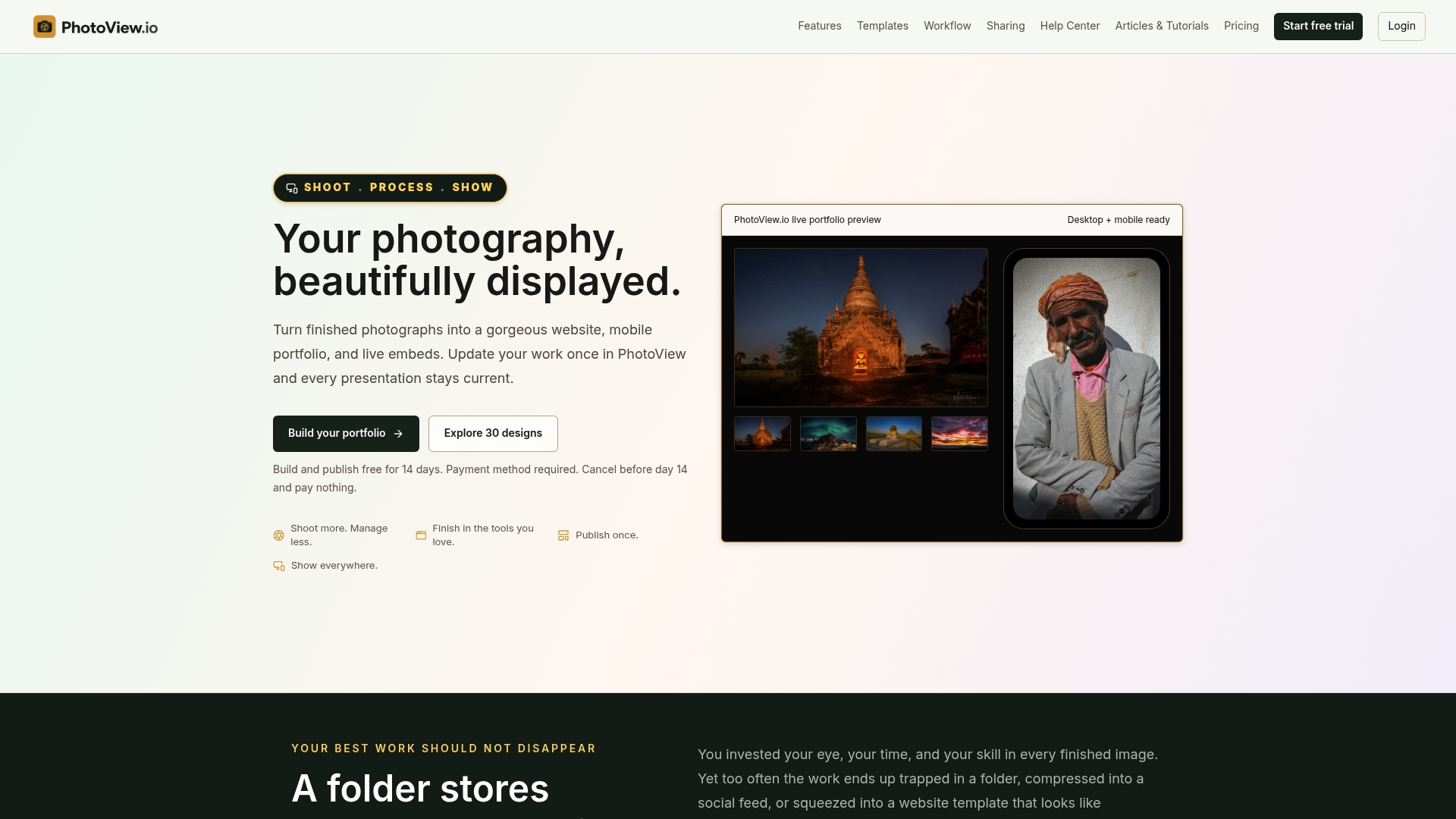
- Private galleries with access control, so each client sees only their own work behind a password or unique link.
- Direct Lightroom publishing and Smart Folders, so finished edits reach a gallery without a manual export step.
- Custom domains and 30+ responsive templates, keeping every gallery on-brand across devices.
- Live embeds, so a gallery stays current on your existing site without re-pasting code.
You can read the full feature set on our private photo sharing page, or compare plans directly on the Photoview homepage, where Starter begins at an affordable monthly price and higher plans add more storage and team access as your client list grows. If you want to see how the features map to your own workflow first, our portfolio platform comparison is a good starting point before you pick a plan.
FAQ
What is the difference between proofing and final delivery?
Proofing is the stage where clients mark favorites or selections inside a private gallery, while final delivery provides the finished, high-resolution files for download or print. Most photographer platforms, including workflows built around gallery proofing, separate the two so clients never download unedited work by mistake.
Should I use a password or a unique link for private galleries?
A unique link with a long, hard-to-guess string offers convenience, while a password adds a second layer that stops anyone who stumbles on the link from opening it. Many photographers use both together for weddings and commercial work where image confidentiality matters most.
Does Lightroom publishing work with any gallery platform?
Direct Lightroom publishing only works with platforms built to support it, so check this specifically before switching tools. PhotoView.io supports publishing directly from Lightroom, which keeps galleries synced without a separate export step.
How long should a platform keep my client’s photos?
Retention policies vary by platform, so ask directly how long images are stored after a plan ends and whether you control deletion. Vendor vetting guidance for image privacy recommends getting this answer in writing before you upload sensitive client work.
What does PhotoView.io cost for a small photography business?
Our Starter plan offers affordable monthly and annual billing options, with additional plans adding storage and features as client volume grows. Custom plans are available for high-volume studios, with pricing available on request through Photoview.
Sources
- Why Student Image and Data Privacy Matter for School Leaders
- Compare PhotoShelter for Photographers and ShootProof
- Gallery proofing workflow for clients