
10 Cargo Alternatives for Photographers With Lightroom Publishing
Compare 10 Cargo alternatives for photographers that support Lightroom publishing, client galleries, and live embeds. Test one in an afternoon.

10 Cargo Alternatives for Photographers With Lightroom Publishing
If you’re outgrowing Cargo, start with PhotoView for Lightroom publishing and client galleries, Webflow or Framer if you want pixel-level design control, Readymag for interactive editorial storytelling, and Carrd if you just need a fast, cheap one-pager. Each solves a different problem Cargo leaves on the table. The right pick depends on whether you’re managing a shoot workflow or building a design statement.
TL;DR:
- PhotoView offers Lightroom publishing and private galleries starting at $3.99 per month, ideal for photographers needing streamlined workflow integration.
- Webflow provides CMS control and code export options with a steeper learning curve, suitable for design-heavy portfolios seeking full customization.
- Framer excels in motion-rich, interactive portfolios but lacks extensive media management features for photographers.
- Readymag supports magazine-style layouts and storytelling-focused sites, making it a top choice for editorial designers.
- Testing gallery display and page load speed on mobile is crucial, as slow performance over two seconds indicates potential compatibility issues before making a switch.
PhotoViewKeep Your Photography Workflow OrganizedPhotoView brings Lightroom publishing, private galleries, and responsive portfolio templates together in one presentation platform for photographers.Explore PhotoView
Table of Contents
- Which Cargo Alternatives Actually Fit Your Workflow?
- What Should You Compare Before Switching From Cargo?
- How Do the Top 10 Cargo Alternatives Compare?
- How Do You Pick and Test the Right Replacement?
- Why Does a Photographer’s Workflow Change This Decision?
- Try PhotoView for a Photography-First Portfolio
- Primary Sources Cited
- Sources
- FAQ
Which Cargo Alternatives Actually Fit Your Workflow?
Not every “cargo alternatives” roundup separates photographers from designers, but you should. Product Hunt’s alternatives list groups the field into three practical buckets: design-first builders with heavy interaction control, photography-first platforms built around Lightroom publishing and client galleries, and lightweight one-page tools for fast landing pages. Knowing which bucket you’re shopping in cuts your trial time in half.
Here’s the shortlist worth testing first:
- PhotoView — best for photographers who publish directly from Lightroom and need private client galleries; standout features are live website embeds and multiple gallery types. Plans start at $3.99 per month on the Starter tier.
- Webflow — best for designers who want CMS control and clean code export; standout is its visual interaction editor paired with a real content management system.
- Framer — best for fast, animation-heavy portfolio sites; standout is design-to-publish speed for motion work.
- Readymag — best for editorial designers building scroll-driven microsites; standout is experimental, magazine-style layout freedom.
- Carrd — best for a single cheap landing page; standout is setup time measured in minutes, not days.
Before committing, run one real gallery through each finalist. Upload a mixed set of horizontal and vertical images, then check how the platform handles spacing and load speed on your phone. That single test exposes more compatibility issues than a week of reading feature lists.
What Should You Compare Before Switching From Cargo?
Cargo earned loyalty from designers who wanted total layout freedom, so any replacement gets judged against that bar first. But design control isn’t the only axis that matters once you’re running a working practice instead of a hobby site.
Weigh these five factors during any trial:
- Design control versus publishing speed. Pixel-level template editors take longer to set up but reward you with a distinct look; template-driven builders publish faster but flatten your visual signature.
- Photography workflow depth. Check for Lightroom publishing, private client galleries, and support for mixed media like video alongside stills. Lightroom publishing and client galleries are decisive enough for working photographers that they justify paying more than a cheaper generic builder charges.
- Blogging and SEO tools. A blog with proper metadata fields feeds long-term search visibility; a portfolio with no blogging path stalls it.
- Integrations and commerce. Confirm payment processing, booking tools, and email marketing connections work before you rely on them for income.
- Red flags. Watch for slow mobile rendering, no export option for your images, or a client gallery feature buried behind an expensive plan.
Pro Tip: Test your blog’s metadata fields during the trial, not after launch. A platform that hides title tags or alt text behind a paywall will cost you search rankings you can’t easily win back.
How Do the Top 10 Cargo Alternatives Compare?
PhotoView leads this list because it’s built specifically around the photographer’s publishing loop: shoot, cull in Lightroom, publish, share with a client, done. The rest split fairly evenly between design-forward builders and photography-focused competitors, with a couple of outliers worth knowing about.
PhotoView solves the one problem most website builders ignore: keeping a site updated without re-uploading everything by hand. Lightroom publishing pushes edited selects straight to your live galleries, private client sharing keeps proofing contained, and live embeds let you drop an updated portfolio onto an existing site without touching code. Every plan, from Starter at $3.99 a month to Premier at $11.99 a month, includes all 30-plus templates rather than gating design options behind higher tiers.

Webflow is the pick for designers who’ve outgrown template constraints entirely. Its CMS lets you build structured, database-driven content, and its code export means you’re never locked into the platform if you outgrow it too. The trade-off is a steeper learning curve than almost anything else on this list.
Framer moves fast in the opposite direction: less database complexity, more motion. If your portfolio leans on scroll animations and interactive transitions, Framer gets you there without touching a line of code.
Readymag is built for people who think of a portfolio as a piece of editorial design, not a grid of thumbnails. Scroll-driven storytelling and unconventional layouts are its reason to exist.
Format keeps the photographer’s workflow front and center, pairing client galleries with built-in print sales and store features, which makes it a natural Cargo substitute for shooters who also sell prints.
Carrd does one thing: a single page, published in minutes, for less money than a coffee subscription. It won’t hold a full portfolio, but for a landing page pointing to your work elsewhere, it’s hard to beat on speed.
Squarespace bundles polished templates with commerce and blogging tools out of the box, appealing to creatives who want one subscription to cover a shop, a blog, and a portfolio.
Adobe Portfolio is the shortest path from Lightroom to a live site if you’re already paying for Creative Cloud. It trades flexibility for near-zero setup friction.
Pixpa targets photographers directly with built-in client galleries and photography-specific templates at accessible pricing, similar in spirit to Format but with its own template library.
We.Inc takes an entirely different approach: describe the site you want and it generates an editable draft from that prompt, with code export available for further refinement. It fits creators who want a fast starting point they can hand-tune later.
How Do You Pick and Test the Right Replacement?
Every serious trial follows roughly the same script, and skipping steps is how people end up migrating twice.
- Import one real project, not a placeholder gallery, so you see actual image handling.
- Test gallery display and mobile responsiveness side by side on your own phone.
- Time page load speed; anything over a couple of seconds on mobile is a warning sign.
- Share a private client gallery link and confirm access controls behave as expected.
- Check the blog editor’s SEO fields, including title tags and alt text.
A practical version of this test: import a 20-image gallery with mixed aspect ratios, enable Lightroom sync if it’s offered, publish a private client link, and check mobile load times — that single afternoon reveals most compatibility gaps before you commit.
Migration effort varies widely. Moving between major platform versions of the same builder can require a manual rebuild, and switching builders entirely almost always means mapping old URLs to new ones and setting redirects before launch to avoid losing search traffic. Budget a full weekend for a small portfolio, longer if you’re preserving years of blog posts and metadata.
Why Does a Photographer’s Workflow Change This Decision?
Consider a working photographer like Mitch Russo, shooting weddings on weekends and editing all week. Every hour spent re-uploading galleries by hand is an hour not spent shooting or editing. A Lightroom publishing workflow removes that manual step entirely, and live embeds mean a portfolio update on one page shows up everywhere it’s linked. The platform that saves you the most maintenance time is usually the right one for your practice, not the one with the flashiest template.
— Mitch Russo
Try PhotoView for a Photography-First Portfolio
PhotoView gives working photographers something most builders on this list can’t: one dashboard where Lightroom publishing, private client galleries, and live embeds all stay in sync automatically, so a single update reaches your site, your client links, and any page where your work is embedded.
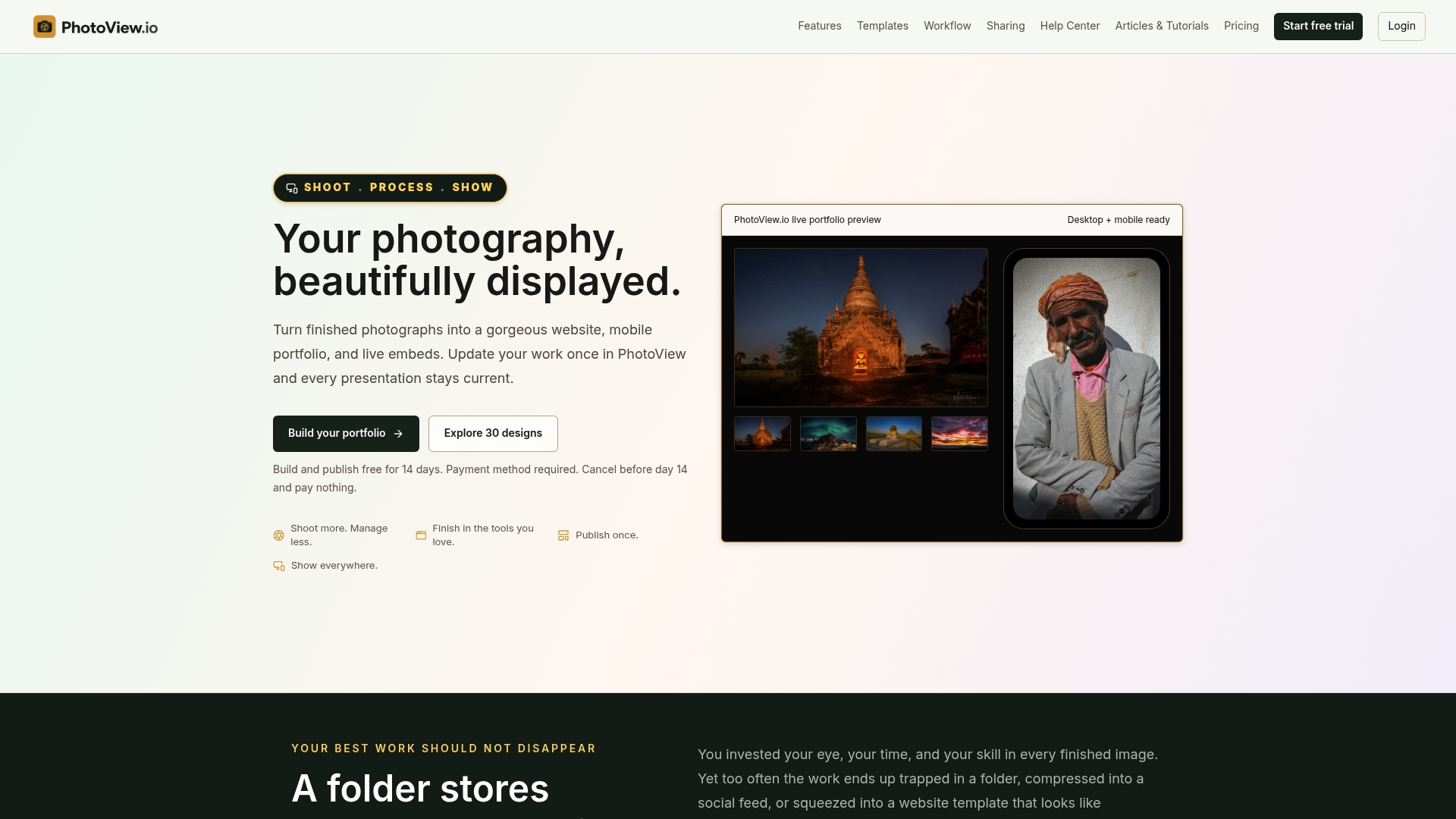
Every plan includes all 30-plus templates, multiple gallery types, and mixed media support for stills and video, starting at $3.99 per month on the Starter plan or $39.99 billed annually. If your current setup means re-exporting and re-uploading every time you finish an edit, explore PhotoView’s Lightroom publishing page and see how a single click replaces that whole routine.
Primary Sources Cited
- Product Hunt’s Cargo alternatives listing — the source for which platforms creatives expect in a roundup like this one.
- We — pricing and feature notes across competing builders.
- Ecommerce Paradise’s Pixpa review — client gallery and pricing comparisons for photography-focused tools.
- Steve Sims’ Cargo migration service page — migration effort and asset mapping guidance.
- nixrs README on GitHub — clarifies the Rust-tooling meaning of “cargo alternatives” that this article does not cover.
Sources
- CARGO Competitors & Alternatives (2026) — Product Hunt
- We
- Pixpa review 2026 — Ecommerce Paradise
- Cargo 2 to Cargo 3 migration service — Steve Sims
FAQ
What Are the Three Types of Cargo Shipping?
This question usually points to the freight industry, not the website builder. In shipping, cargo is generally split into bulk cargo, containerized cargo, and breakbulk cargo, each suited to different transportation alternatives and logistics solutions. If you landed here searching for a Cargo website builder replacement instead, the shortlist above covers that intent.
What Are Some Websites Similar to Cargo?
The closest matches depend on what you value most. Webflow, Framer, Readymag, Format, and Carrd are the platforms most commonly listed as Cargo alternatives, while PhotoView, Format, and Pixpa cover the photography-specific side of that comparison.
What Is Another Word for “Cargo” in Shipping Contexts?
Outside of the website builder, “cargo” is often used interchangeably with “freight,” and sometimes with “shipment” depending on the mode of transportation. None of these terms relate to the Cargo website platform this article compares.
What Are Some Alternatives to Cargo Pants?
If you’re searching for clothing rather than software, common alternatives include chinos, joggers, and utility pants, but that’s outside the scope of this comparison. This article focuses exclusively on website and portfolio builders that replace Cargo the platform.
How Much Does PhotoView Cost Compared to Other Builders?
PhotoView’s plans start at $3.99 per month or $39.99 per year on the Starter tier, with Growth, Studio, and Premier tiers scaling up to $11.99 per month for higher storage needs. Every tier includes all templates and gallery types, unlike builders that gate design options behind pricier plans.