
Portfolio First Pixpa Alternatives for Photographers: Lightroom Sync
Compare Pixpa alternatives built for photographers. See which platforms support Lightroom publishing, proofing, storage terms, and portfolio-first...

Portfolio First Pixpa Alternatives for Photographers: Lightroom Sync
If you need a portfolio-first workflow with Lightroom publishing built in, PhotoView is the recommended Pixpa alternative. For polished all-in-one design, Squarespace or Wix fit better. Photographers who want full ownership of their stack should look at WordPress, while designers chasing granular control lean toward Webflow or Duda. Detailed comparisons and a buying checklist follow below.
TL;DR:
- PhotoView specializes in portfolio publishing with Lightroom integration, live embed updates, and organized image management through Smart Folders.
- Platforms like Squarespace and Wix offer easier setup with premium templates and customization, but lack PhotoView’s focus on synchronized finished photo presentations.
- WordPress and Webflow give more control over hosting and design, yet require greater technical skills and ongoing maintenance, unlike PhotoView’s low-upkeep model.
- When choosing, photographers should test image resolution handling, private gallery functions, and export options during free trials to avoid future limitations.
- Confirm storage policies, ecommerce workflows, and domain management to ensure smooth scaling and switching if plans or needs change.
PhotoViewKeep Your Portfolio in SyncPhotoView helps photographers publish polished portfolios, manage finished media, and keep website embeds updated from one dashboard.Explore PhotoView
Table of Contents
- Top Pixpa alternatives for photographers, ranked
- Detailed comparison: what each platform actually offers photographers
- How to choose: a photographer’s checklist before you commit
- Why PhotoView focuses on portfolio-first publishing
- Try PhotoView: templates and a starter plan to test the fit
- Sources
- FAQ
Top Pixpa alternatives for photographers, ranked
Every photographer switching from Pixpa is really asking one question: does this platform treat my images the way I need them treated? Some tools were built for photography first; others were built for general business use and bolted galleries on later. That distinction shapes the shortlist.
- PhotoView: built around portfolio publishing, with Lightroom uploads, Smart Folders, and live embeds that keep an existing website current without a rebuild.
- Squarespace: the strongest pick for photographers who want premium-looking templates and built-in commerce with minimal setup.
- Wix: the widest template selection and the most drag-and-drop flexibility, useful if you want to customize layout without touching code.
- WordPress: the right choice if you want to own your stack and are comfortable managing hosting, plugins, and updates yourself.
- Webflow or Duda: pick one of these if you or a designer wants layout control closer to hand-coded CSS, or if you collaborate with a team that needs shared editing and white-labeling.
Each of these solves a different version of the same problem. PhotoView, Squarespace, and Wix all reduce setup friction, but only PhotoView is built specifically around presenting finished photo and video work and keeping it synced everywhere it appears. Marketplace comparisons on Capterra list similar alternatives and note that review volume and billing terms deserve as much attention as the feature list. WordPress and Webflow sit at the other end of the spectrum: more control, more setup, and ongoing maintenance that a template-first tool avoids.
Detailed comparison: what each platform actually offers photographers
The differences that matter most to photographers rarely show up in a marketing headline. They show up in how a platform handles a raw-processed JPEG, how a client views a private gallery, and what happens when your storage fills up.
- PhotoView: publishes directly from Lightroom, organizes images with Smart Folders, and updates live embeds on an existing site from one dashboard; billing is subscription-based with tiers set by storage.
- Squarespace: polished, mobile-responsive templates with integrated commerce, according to G2’s comparison, though gallery-specific tools like proofing are limited compared to photography-dedicated platforms.
- Wix: flexible drag-and-drop editing with a large app marketplace, favoring customization over the consistent premium look Squarespace offers.
- WordPress: requires separate hosting plus plugins for proofing or galleries, and G2 Learn points out that its low software cost often hides hosting, security, and maintenance costs that add up over time.
- Webflow: design-system control similar to hand-coding CSS, a strong fit for designers but a steep learning curve for anyone without design or development background.
- SmugMug: photo-focused hosting with unlimited storage tiers and print lab integrations for photographers who sell prints directly.
- Zenfolio: built-in client proofing and ordering workflows aimed at event and wedding photographers.
- Duda: team collaboration and white-labeling features suited to agencies managing multiple client sites.
- Elementor: a visual page builder inside the WordPress ecosystem, useful if you already run WordPress and want more layout flexibility without full custom code, as detailed in Elementor’s own comparison.
- GoDaddy Website Builder: fast setup bundled with domain and hosting management, aimed at photographers who want the fewest possible decisions.
- Weebly, Webnode, ClickSites, Divi: general-purpose builders that can host a portfolio but lack dedicated proofing or print commerce tools.
- SiteGround, Hostinger, DreamHost, Bluehost, A2 Hosting, WP Engine, Cloudways, Nexcess, IONOS by 1&1, Elementor Hosting: hosting providers rather than website builders. They only matter if you choose the WordPress route, since WordPress needs a host and these are the common choices for speed, support, and price. Findstack’s roundup groups several of these alongside dedicated portfolio platforms, which can blur the comparison if you’re not building on WordPress.
Before committing to any platform, check how it handles export. Some restrict full-resolution downloads behind higher tiers, according to Capterra’s alternatives page, which can trap your galleries at a lower quality than you uploaded.
How to choose: a photographer’s checklist before you commit
Feature lists look similar until you actually upload a gallery. Test these specifics during any free trial rather than relying on the marketing page.
- Image handling: confirm the platform preserves resolution and compresses sensibly for retina displays without visible artifacts.
- Client galleries: test private link sharing, proofing, and ordering flow the way a real client would use it.
- Lightroom or desktop publishing: check whether you can push a finished edit straight from your editing software or must export and re-upload manually.
- Storage policy: read the fine print on overage fees and whether storage resets annually or accumulates.
- Ecommerce and prints: verify checkout, print lab integration, and payout timing if you sell directly.
- SEO and page speed: run a test page through a speed checker before and after adding a full gallery.
- Domains and redirects: confirm you can point an existing domain at the new site without losing existing search traffic.
Pro Tip: Before you commit to any plan, check the billing cadence, how storage resets, and whether you can export your galleries and metadata cleanly. That last step protects you if you switch again later.
Why PhotoView focuses on portfolio-first publishing
PhotoView was built around one job: helping photographers present finished work without managing a website like a second business. Lightroom publishing, Smart Folders, and live embeds exist because updating a portfolio should take minutes, not a rebuild. That focus suits travel, fine art, wedding, commercial, and product photographers who want their site to stay current with minimal upkeep. It suits those photographers more than it suits anyone building a multi-page business site with blog content and marketing funnels, and that trade-off is intentional.
— Mitch Russo
Try PhotoView: templates and a starter plan to test the fit
If the checklist above matters to you, upload your work and see how it holds up. PhotoView keeps your galleries centralized and pushes updates to your website, mobile presentation, and any live embed from one dashboard, so you update your work once instead of rebuilding a page every time a shoot wraps.
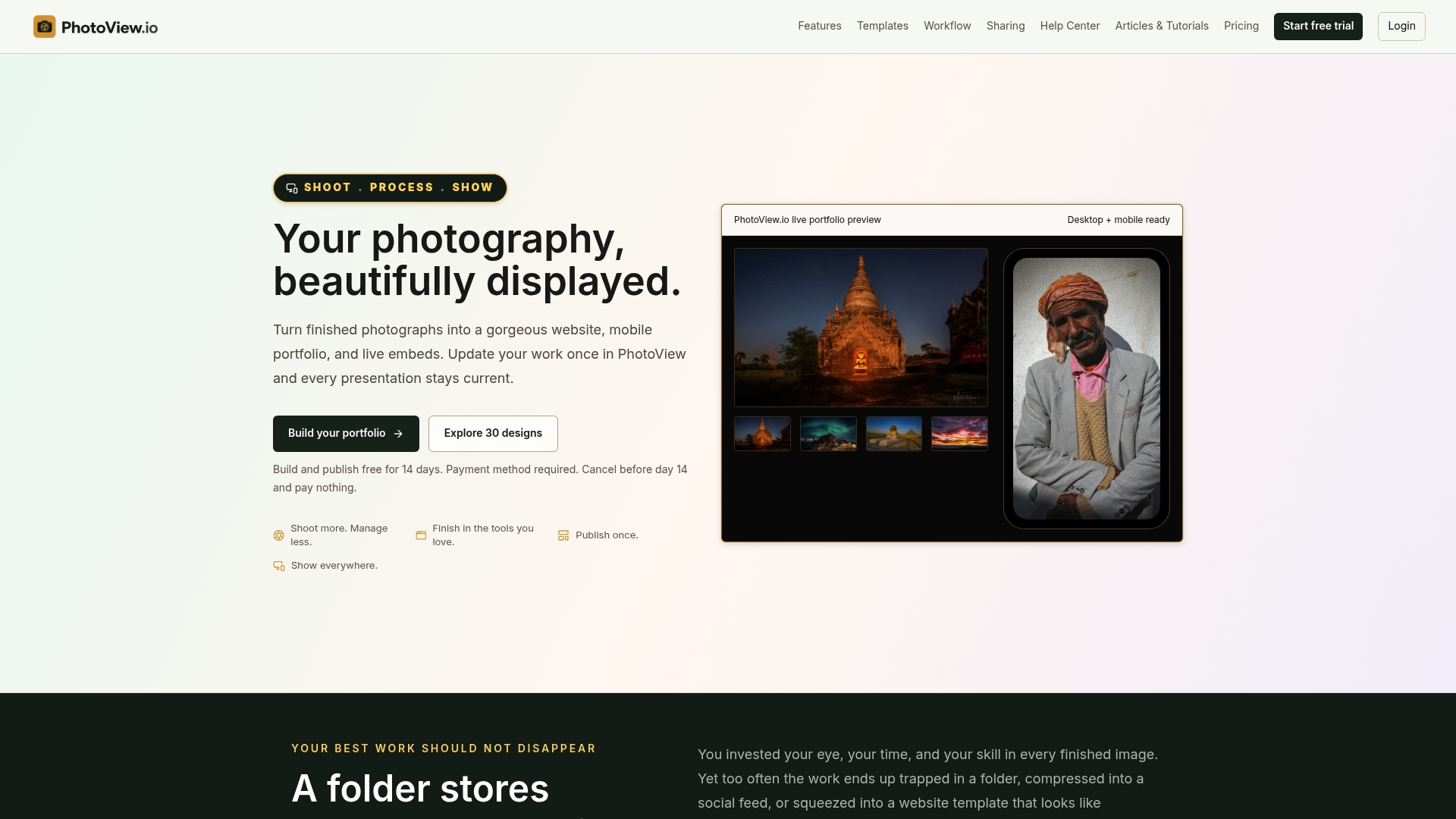
- Browse the photography website templates to see how your galleries would actually look before signing up.
- Test the Lightroom publishing workflow with a real shoot, not a placeholder folder.
- Start with the Starter plan and upload a mixed set of 20 to 30 images to see how storage and gallery display behave before upgrading.
If you already run a site elsewhere, the embed feature lets you keep that site and still update your portfolio from PhotoView. And if your build calls for a fully custom site instead of a template, a partner like Coleman Web Design or Blucat Group can scope that separately.
Sources
- Pixpa alternatives
- Squarespace vs Wix comparison — G2
- Wix vs WordPress: Ownership and cost considerations — G2 Learn
- Pixpa Reviews, Pricing & Alternatives (2026) | Toolradar
FAQ
Is Pixpa a good website builder?
Pixpa is well regarded for its client-gallery, proofing, and integrated commerce tools, according to Toolradar’s review. Whether it suits you depends on how much you value those photography-specific features versus a more design-flexible general builder like Wix or Squarespace.
Is Pixpa free?
Pixpa does not appear to offer a permanent free plan based on available comparisons; most photography-focused platforms, including PhotoView, use tiered paid subscriptions instead. PhotoView’s own plans start at $3.99 per month or $39.99 per year for the Starter tier.
Is there a better option than Squarespace?
It depends on what you’re optimizing for. Squarespace offers polished templates and built-in commerce, per G2’s comparison, but photographers who want Lightroom publishing and centralized portfolio management may find PhotoView a closer fit for that specific workflow.
What should I upload during a trial to test a new platform?
Upload a representative shoot of 20 to 30 processed images with mixed orientations, including at least one gallery with print-orderable files. Then test the client proofing flow, download options, and checkout process to catch hidden fees or image-handling issues early.