
Publish From Lightroom: Weebly Alternatives for Photographers
Compare Weebly alternatives for photographers that prioritize Lightroom publishing, mobile image quality, and private client galleries to find the right...

Publish From Lightroom: Weebly Alternatives for Photographers
PhotoView stands out among Weebly alternatives for photographers who want a dedicated portfolio workflow, but it is not the only path worth considering. Design-first builders like Squarespace and Showit, photography-hosted platforms like SmugMug and Zenfolio, all-purpose builders like Wix and WordPress, and developer platforms like Webflow each serve different priorities around templates, client galleries, and image handling. The right pick depends on how much you value Lightroom publishing, private client sharing, and getting your images to look sharp on a phone.
TL;DR:
- PhotoView supports WebP image compression that can reduce file sizes by 25 to 35 percent without sacrificing quality, especially on mobile devices.
- It offers Lightroom publishing, Smart Folders, private sharing, and over 30 responsive templates, streamlining workflow and gallery management for photographers.
- Most photography sites should test image quality on mid-tier phones and run performance checks to ensure compressed images remain sharp and load quickly.
- When choosing a platform, photographers must assess storage, privacy features, SEO options, and export capabilities to avoid future migration issues.
- The best long-term choice depends on workflow needs over design preferences, emphasizing automation and image handling rather than template aesthetics.
PhotoViewPublish Your Portfolio From LightroomPhotoView helps photographers organize galleries, publish through responsive templates, and keep website embeds updated from one dashboard.Explore PhotoView
Table of Contents
- Comparing the top Weebly alternatives for photographers
- What actually separates a good photography site from a mediocre one
- How to choose the right platform without regretting it later
- Why PhotoView fits the portfolio-first approach
- The part of this decision most photographers get backward
- Try PhotoView before you commit to anything else
- Resources for testing image delivery and comparing builders
- Sources
- FAQ
Comparing the top Weebly alternatives for photographers
PhotoView is built around a portfolio-first workflow: Lightroom publishing pushes finished edits straight to your site, Smart Folders keep galleries organized without manual sorting, and more than 30 responsive templates give you a starting point without locking you into one look. Private sharing and live embeds mean you can send a client-only gallery or update an embedded portfolio on another site without touching code. Plans run from Starter through Premier tiers, with all templates included at every level.
Design-first builders take a different approach. They prioritize page-building flexibility and visual styling over photography-specific workflow, which means you get more creative control over layout but often less control over how your images get compressed on the way to the browser.
- Squarespace: best for photographers who want designer-quality templates and built-in commerce without much setup; its standout is a library of photography-oriented templates that look polished out of the box.
- Wix: best for photographers who want drag-and-drop flexibility and access to a large app marketplace; the trade-off is that editor flexibility can invite over-design if you’re not careful.
- Showit: best for photographers chasing pixel-perfect, design-first pages; its visual editor gives you more layout control than most template-based builders.
- Webflow: best for photographers or small teams who want custom, high-performance sites; it rewards technical comfort with real control over site speed and structure, but the learning curve is steeper.
Photography-hosted gallery platforms exist specifically to solve client delivery and print sales, which is where general-purpose builders tend to fall short.
- SmugMug: best for photographers who sell prints and need protected galleries with fulfillment built in; its standout is print integration paired with client-proofing tools.
- Zenfolio: best for photographers whose business centers on delivering and selling client galleries; ordering and gallery delivery are its core strength.
- Format: best for photographers who want portfolio-focused templates alongside client-facing proofing; it leans toward presentation first, sales second.
- Pixpa: best for photographers who want simple galleries plus basic commerce in one place; it bundles portfolio and store features without much complexity.
All-purpose site builders offer breadth: easier SEO tooling, wide plugin ecosystems, and fast setup, but photography often takes a back seat to general business features.
- WordPress: best for photographers who want full customization through themes and plugins; the extensibility is real, but so is the maintenance burden.
- Hostinger Website Builder: best for photographers who want an affordable, no-frills site paired with hosting in one purchase.
- GoDaddy: best for photographers who want domain, hosting, and a basic site bundled from a single provider.
- Webnode: best for photographers who need a quick, low-friction setup without a steep learning curve; fast to launch, simple to edit.
- Site123: best for photographers on tight budgets who just need a simple online presence; templates are straightforward rather than distinctive.
- Webador: best for photographers who want an easy, budget-friendly builder with minimal setup decisions.
Across all of these, the photographer-focused comparisons that guide most buying decisions tend to name Format, SmugMug, Showit, Squarespace, and Wix as the most frequently considered alternatives, largely because they balance presentation quality with some form of client-facing gallery tool.
What actually separates a good photography site from a mediocre one
Two sites can use the same template and still deliver wildly different results once real photos load. The differences show up in four places: image handling, gallery variety, client tools, and workflow integration.
- Image delivery and formats. Look for WebP support, since it offers both lossless and lossy compression that can reduce file sizes while keeping images sharp, and confirm the platform preserves your originals rather than only storing a compressed copy. Automatic resizing and retina (2x) handling matter too, since a soft, blurry hero image on a high-resolution phone screen undercuts the whole point of a portfolio.
- Gallery and template variety. Grid, masonry, fullscreen, and slideshow layouts each suit different kinds of work, and mixed-media support for video alongside stills matters if you shoot both.
- Client-facing tools. Password-protected or private galleries, control over download permissions, and print-order integrations determine whether a platform can actually run your client workflow, not just display your portfolio.
- Workflow and integrations. Lightroom publishing, FTP access, embed options, and export or backup capabilities decide how much manual work you redo every time you update your site.
On the technical side, WebP compression often reduces file size by roughly 25 to 35 percent depending on the image, but the number only matters if the compressed version still looks good on a phone. That’s why a visual check beats a spec sheet every time.
Run this test on any platform you’re trialing: pick three representative hero images (a detailed landscape, a studio headshot, and a low-light scene), upload them, and view the result on a mid-tier phone. Then run a basic Lighthouse test to check load performance. If the compressed image loses detail you can see without zooming in, that platform is recompressing too aggressively for your work.
Pro Tip: Test your worst-case image, not your best one. A platform that handles a clean daylight shot well can still butcher a high-ISO, low-light frame.
Photographers who want a deeper look at making this Lightroom-to-web handoff smoother can review this Lightroom publishing workflow for a practical walkthrough.
How to choose the right platform without regretting it later
Before you commit to any platform, run through a short checklist that covers both what you need today and what breaks if the platform doesn’t deliver.
- Storage versus bandwidth: confirm whether pricing scales with storage, visitor traffic, or both, since a busy portfolio can hit bandwidth caps fast.
- Client delivery patterns: decide whether you need private galleries, download permissions, or print ordering built in.
- SEO needs: check whether the platform allows custom meta titles, alt text, and clean URLs for your portfolio pages.
- Custom domain and email: verify the platform supports your own domain without forcing a subdomain.
- Integrations: confirm Lightroom publishing or export options exist if that’s part of your workflow.
During any trial, ask direct questions: can you upload and download your original files, not just compressed versions? Does the platform preserve EXIF data? How exactly are galleries shared privately, and can clients download at full resolution if you allow it? Are images recompressed automatically, and can you control that? What happens if you want to export everything and leave?
Watch for red flags that signal a platform will cause problems later: no way to export your originals, forced high-compression delivery with no override, no private client gallery option, or no free trial and vague pricing that surfaces hidden fees at checkout.
Most platforms, PhotoView included, follow a starter-to-studio pricing progression. Start on the entry tier while you’re testing templates and workflow, then upgrade once you have real client volume or need more storage.
Why PhotoView fits the portfolio-first approach
PhotoView’s core features map directly onto what photographer-focused platforms need: Lightroom publishing, Smart Folders for organization, more than 30 responsive portfolio templates, private sharing, and live embeds that update automatically. These are platform-level facts, not projections, and they cover the four areas that matter most: image handling, gallery variety, client tools, and workflow integration.
For migration, PhotoView’s template range and embed options mean you can move a portfolio over without rebuilding pages by hand. Try the Lightroom publishing solution during a trial to see how much manual re-uploading it removes from your routine.

The part of this decision most photographers get backward
Most photographers pick a website builder based on template looks first and workflow second, then spend the next two years fighting the platform every time they publish new work. That’s backward. Templates are replaceable. A publishing workflow that costs you twenty minutes of manual resizing and re-uploading every time you finish a shoot is not.

The conventional advice, compare templates, compare pricing, pick the prettiest one, skips the question that actually predicts long-term satisfaction: how does your work get from your editing software to a client’s screen, and how much of that process happens automatically? Image compression and mobile rendering get even less attention, despite being the first thing any client notices when they open a link on their phone.
If you take one thing from this comparison, test the unglamorous parts first: image quality on mobile, private gallery sharing, and how many manual steps stand between a finished edit and a live portfolio page. The template you love today will not fix a workflow that fights you every week.
— Mitch Russo
Try PhotoView before you commit to anything else
If the workflow gaps above sound familiar, a PhotoView trial costs nothing to explore and takes a few minutes to set up on the PhotoView landing page.
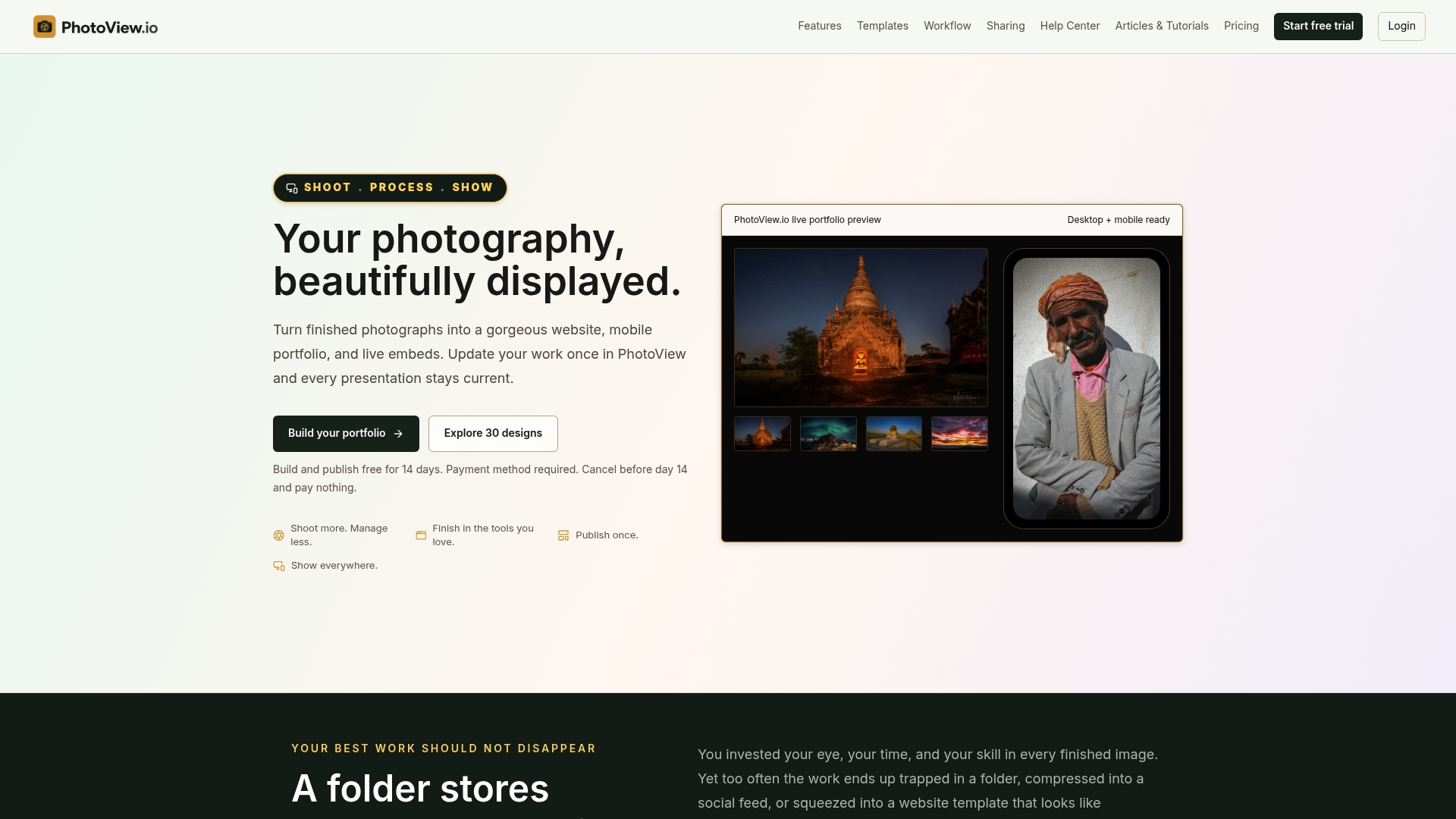
During the trial, try three things: publish a set of edits straight from Lightroom, build a private gallery and share it with a real or test client, and embed a live portfolio on an existing site to see it update without a rebuild. Explore Lightroom publishing, private sharing, and live embeds to see whether the workflow fits how you actually shoot and deliver.
Resources for testing image delivery and comparing builders
Before you settle on a platform, run web.dev’s WebP guidance and a Lighthouse test on any trial site to check real-world load performance. For image compression specifics on your own photos, this image SEO optimization guide covers practical steps worth applying before launch. Pair either resource with the hero-image mobile test described above for a fuller picture.
Sources
FAQ
What is the best alternative to Weebly for photographers?
There is no single best alternative since the right choice depends on priorities: PhotoView suits photographers who want Lightroom publishing and private client sharing, while Squarespace and Showit suit those who prioritize designer templates. Photography-hosted platforms like SmugMug and Zenfolio suit photographers focused on selling prints and delivering client galleries.
What is the best website platform for photographers?
The best platform balances presentation-quality templates, client galleries, and straightforward publishing workflow rather than any single standout feature. Photographer-focused comparisons consistently point to platforms that combine these three elements instead of ranking by design alone.
What is the best website template for a photographer?
The best template depends on your work: masonry and grid layouts suit varied portfolios, while fullscreen and slideshow templates suit photographers who want each image to dominate the screen. Look for a template library that includes mixed-media support if you shoot video alongside stills.
What is the best website for a photographer to showcase client work?
A platform with private galleries, download controls, and print-order integration serves client-facing work best, since these features control how clients view and receive their images. PhotoView’s private sharing and SmugMug’s client-proofing tools both address this need, though they take different approaches to delivery.
How much does PhotoView cost compared to other photography site builders?
PhotoView offers several subscription plans with varying features and storage; for current prices, see the pricing page on the PhotoView website. Pricing across the category generally follows a similar starter-to-studio progression, though exact costs vary by platform and plan.