
Protect Photos Online: The Public Link Risk for Photographers
Protect photos online with private galleries, secure accounts, backups, and copyright registration. Photographers can secure originals and share work safely.

Protect Photos Online: The Public Link Risk for Photographers
The fastest way to protect your photos online is to secure the accounts that control them, share work through private or password-protected galleries, and register your strongest images with the U.S. Copyright Office. Add visible watermarks and embedded metadata as a second layer, then monitor the web for copies. None of these steps works alone, but together they close most of the gaps that lead to stolen or misused images.
TL;DR:
- Secure email first because it can reset other accounts, then enable multifactor authentication with an authenticator app or hardware key instead of SMS codes.
- Use password protected galleries and expiring links for client delivery; view only settings deter casual downloads but cannot prevent screenshots by determined viewers.
- Register before publication or within three months after it to preserve eligibility for statutory damages and attorney fees; group filings can reduce paperwork.
- Keep untouched RAW originals with intact metadata as ownership evidence, since metadata can be stripped; timestamped backups or file hashes add provenance.
- Search valuable images with Google Images or TinEye every few months, then save screenshots, URLs, and dates before requesting credit or removal.
PhotoViewShare Your Photos More PrivatelyPhotoView helps photographers present finished photos and videos through private sharing and responsive portfolio galleries from one dashboard.Explore PhotoView
Table of Contents
- Fast, high-impact actions you can do in minutes
- Hardening accounts and devices that hold or control your photos
- Safe sharing: private galleries, view-only links, and hosting choices
- Ownership signals: visible watermarks, embedded metadata, and provenance tactics
- Finding copies and documenting unauthorized use
- U.S. copyright basics photographers need to know
- A repeatable shoot-to-share checklist photographers can adopt
- Balancing access and protection in a photographer’s workflow
- PhotoView: secure portfolio hosting and private sharing for photographers
- FAQ
- Sources
Fast, high-impact actions you can do in minutes
Before anything else, lock down the systems that guard your photos. A few small changes now prevent most of the common break-ins we see photographers deal with later.
- Turn on multi-factor authentication for your email, social, and cloud storage accounts, choosing an authenticator app or hardware key over less secure text message codes.
- Replace weak or reused passwords with unique ones generated and stored in a password manager.
- Set your galleries to private or password-protected, and strip location data from images before you post them.
- Back up original files to an encrypted external drive or a secure portfolio host so a single compromised account never puts your entire archive at risk.
Pro Tip: Do the email account first. It’s the recovery key for almost every other account you own.
Hardening accounts and devices that hold or control your photos

Your email account is the master key to your photography business. Anyone who gets into it can reset passwords on your cloud storage, your social accounts, and your client galleries, so it deserves the strongest protection you have.
CISA identifies multi-factor authentication as the most critical step for securing online accounts, and recommends phishing-resistant methods like hardware FIDO security keys over SMS codes, which attackers can intercept through SIM-swapping. The FTC’s guidance on two-factor authentication echoes this: layered security, meaning strong unique passwords combined with MFA and regular privacy audits, works better than any single defense.
- Enable MFA everywhere a photo lives: email, cloud storage, social platforms, and your portfolio host.
- Keep your operating system and antivirus software current, and scan your devices regularly for malware.
- If you suspect a compromise, reset your passwords immediately and enable two-factor authentication, sign out of all active sessions, and check for unfamiliar email forwarding rules.
- Treat your email provider’s security settings as seriously as your bank’s.
Safe sharing: private galleries, view-only links, and hosting choices
How you deliver photos matters as much as how you store them. Public links and open folders invite casual downloads, and casual downloads turn into unauthorized use faster than most photographers expect.
- Deliver client work through password-protected galleries rather than shared links, and use expiring access for time-limited jobs.
- Understand that view-only or block-download settings, like the ones Microsoft offers in OneDrive and SharePoint, reduce casual downloading but don’t stop a determined viewer from taking a screenshot.
- Compare general-purpose cloud storage with photographer-focused hosting: the latter typically adds Lightroom publishing, gallery-level privacy controls, and a workflow built around delivery rather than generic file sharing.
- Publish low-resolution, watermarked versions publicly when you need visibility, and keep full-resolution originals behind private access.
Platform security matters too. Keeping your own site patched, backed up, and running current software, the kind of basic website security hygiene any small business should follow, closes another door attackers might use to reach your image files.
Ownership signals: visible watermarks, embedded metadata, and provenance tactics
A subtle watermark in a corner or along an edge protects a web-sized export without wrecking the composition your client is paying for. Save that watermarked version separately from your working files, so your archive always keeps a clean copy.
- Embed your name and contact information in the IPTC and EXIF copyright fields of every export.
- Keep your original RAW files untouched, with metadata intact, as your reference copy if ownership is ever questioned.
- Use file hashing or timestamped backups so you can demonstrate when a file was created.
- Remember that metadata can be stripped by anyone who knows how, so treat it as one layer in a broader strategy rather than your only defense.
Pro Tip: Keep a master folder of untouched originals you never upload anywhere. It’s your proof when a watermark or metadata tag gets removed.
Finding copies and documenting unauthorized use
You can’t act on theft you don’t know about, so a regular check for misuse belongs in your routine, not just your reaction plan.
- Run a reverse image search on Google Images or TinEye for your most shared or most valuable photos every few months.
- Consider a monitoring service if your catalog is large. Automated scanning catches matches faster than manual searches, but it still needs a human plan behind it.
- When you find a copy, screenshot the page, record the URL, and note the date before anything changes.
- Start with a polite message asking the user to credit or remove the image, then move to a formal DMCA takedown request if that doesn’t work, and escalate to legal counsel for repeated or commercial infringement.
U.S. copyright basics photographers need to know
Your photos are protected by copyright the moment you create them, but registration is what gives that protection teeth. Timely filing with the U.S. Copyright Office preserves your eligibility for statutory damages and attorney’s fees, which matter enormously if you ever need to pursue an infringement claim.
- Register before publication, or within three months after, to maximize the remedies available to you.
- Look into group registration options, which can lower the cost and paperwork for photographers filing many similar images at once.
- File through the Copyright Office’s eCO system and keep organized records of what you submitted and when.
- Group your filings by publication year and claimant to keep the process manageable as your catalog grows.
A repeatable shoot-to-share checklist photographers can adopt
Protection works best as a habit, not a one-time fix. Build it into the same workflow you already use for editing and delivery.
- Before the shoot: turn off geotagging on your devices and confirm your backup settings are active.
- During ingest: preserve RAW originals, add IPTC copyright data, and create separate web-sized exports with watermarks.
- At publish time: send client galleries through password-protected or private links, and only post public, low-resolution versions when visibility is the goal.
- On an ongoing basis: keep MFA active across accounts, schedule periodic reverse image searches, and register your strongest work with the Copyright Office.
Balancing access and protection in a photographer’s workflow
Every photographer faces the same tension: clients want easy access to their galleries, and you want control over where those images end up. The answer isn’t choosing one over the other. It’s building a delivery process where privacy is the default and access is something you grant deliberately, not something anyone can stumble into.
A photographer-focused host that handles private sharing and secure storage removes most of that friction, so protection stops feeling like an extra chore layered on top of your editing work. Try tightening one piece of your workflow at a time and see what actually changes.
— Mitch Russo
PhotoView: secure portfolio hosting and private sharing for photographers
We built PhotoView around the problem this article just walked through: photographers need to deliver beautiful work without handing over control of it. Every plan includes private sharing, password-protected galleries, and secure storage for your originals, so you can send a client their finished set without worrying about an open link floating around the internet.
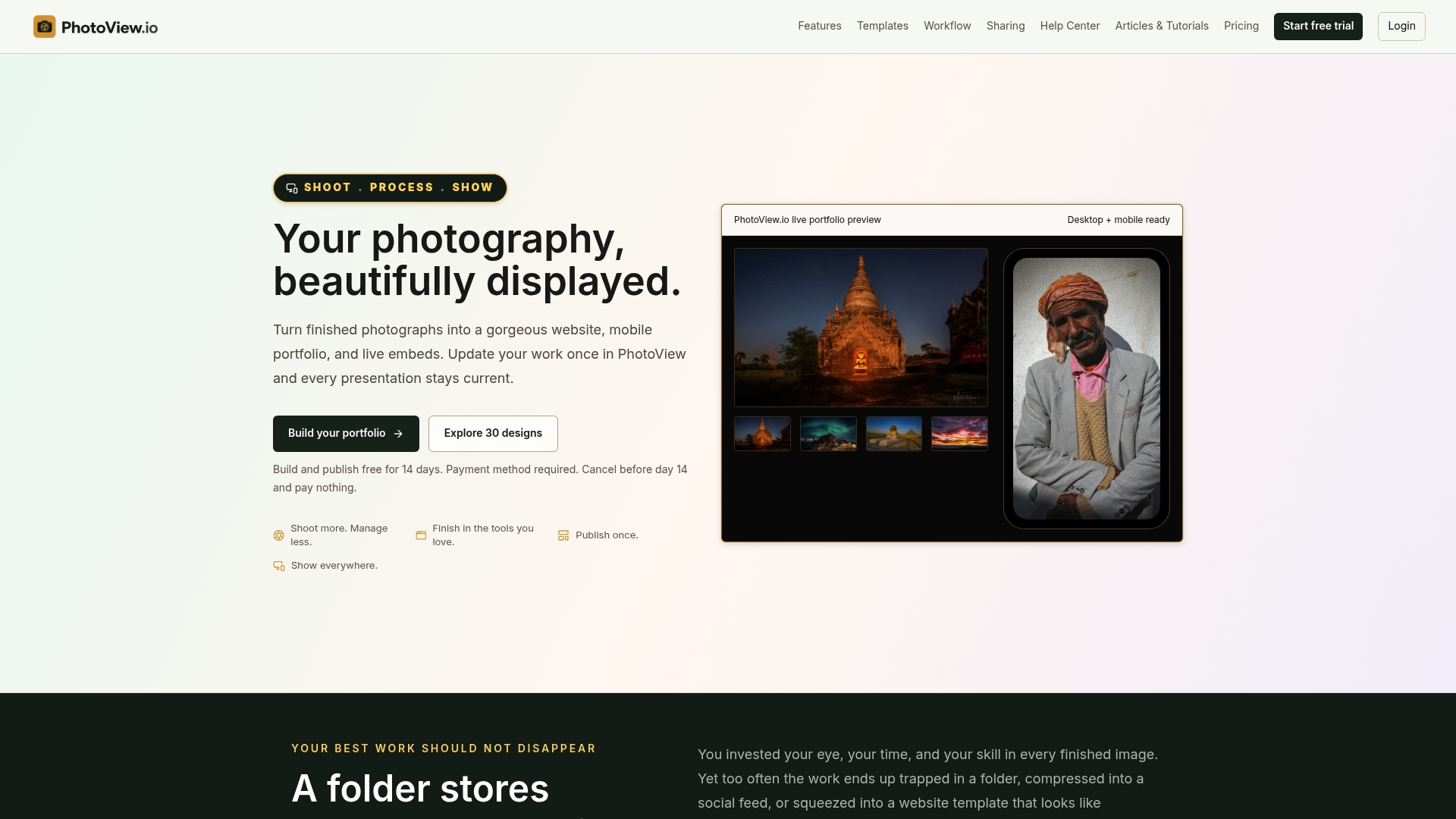
Picture a wedding delivery: you publish the gallery through PhotoView, set a password for the couple, and keep your RAW files backed up in your organized photo storage at the same time. Nothing gets duplicated across five different tools.
- Publish directly from Lightroom.
- Manage multiple galleries, mixed media, and custom branding from one dashboard.
- Update live embeds on your website from the central portfolio management.
Annual billing is available on every plan at a lower effective rate, and a Custom plan covers high-volume storage needs. Start a plan on our pricing page and move your next gallery delivery behind a password today.
FAQ
How to keep your photos safe online?
Secure your accounts with multi-factor authentication, share work through private or password-protected galleries instead of open links, and back up your originals somewhere encrypted. Add watermarks and embedded metadata as a second layer of protection.
Where is the safest place to store photos online?
The safest storage combines encrypted backups of your original files with a platform that offers strong privacy controls for sharing, such as password-protected or expiring links. A photographer-focused host typically adds more granular gallery privacy than general-purpose cloud storage.
How do I tell if someone has access to my photos?
Check your account’s active sessions and sign-in history for devices or locations you don’t recognize, and review any email forwarding rules you didn’t set up yourself. The FTC’s account recovery guidance walks through these exact steps after a suspected compromise.
How do I protect photos?
Combine account security, private sharing settings, visible watermarks, embedded metadata, and periodic reverse image searches. For your most valuable work, register it with the U.S. Copyright Office to preserve your legal remedies if someone uses it without permission.
Sources
- Turn on multi-factor authentication (MFA) | CISA
- Use two-factor authentication to protect your accounts | FTC
- Form GR/PPh/CON — U.S. Copyright Office